


CNC Drilling Safety Wire Holes in Aerospace Bolts: Precision, Compliance, and Efficiency in Modern Manufacturing
In the aerospace industry, precision is not optional—it is a strict requirement. Every component, down to the smallest fastener, must meet rigorous safety and performance standards. One such critical process is CNC drilling safety wire holes in aerospace bolts, a specialized machining operation that ensures bolts remain securely fastened under extreme conditions such as vibration, pressure, and temperature fluctuations.
This article explores the importance, technology, applications, and best practices of CNC drilling safety holes in aircraft bolts, while aligning with E-E-A-T (Experience, Expertise, Authoritativeness, Trustworthiness) standards to provide reliable and actionable insights for engineers, manufacturers, and procurement professionals.
What Are Safety Wire Holes in Aerospace Bolts?
Safety wire holes—also known as lock wire holes—are small, precisely drilled holes in the heads or shanks of aerospace bolts. These holes allow safety wire to pass through and secure fasteners, preventing them from loosening during operation.
Why They Matter:
Prevent loosening caused by vibration
Enhance mechanical locking reliability
Meet strict aviation safety regulations
Ensure long-term operational stability
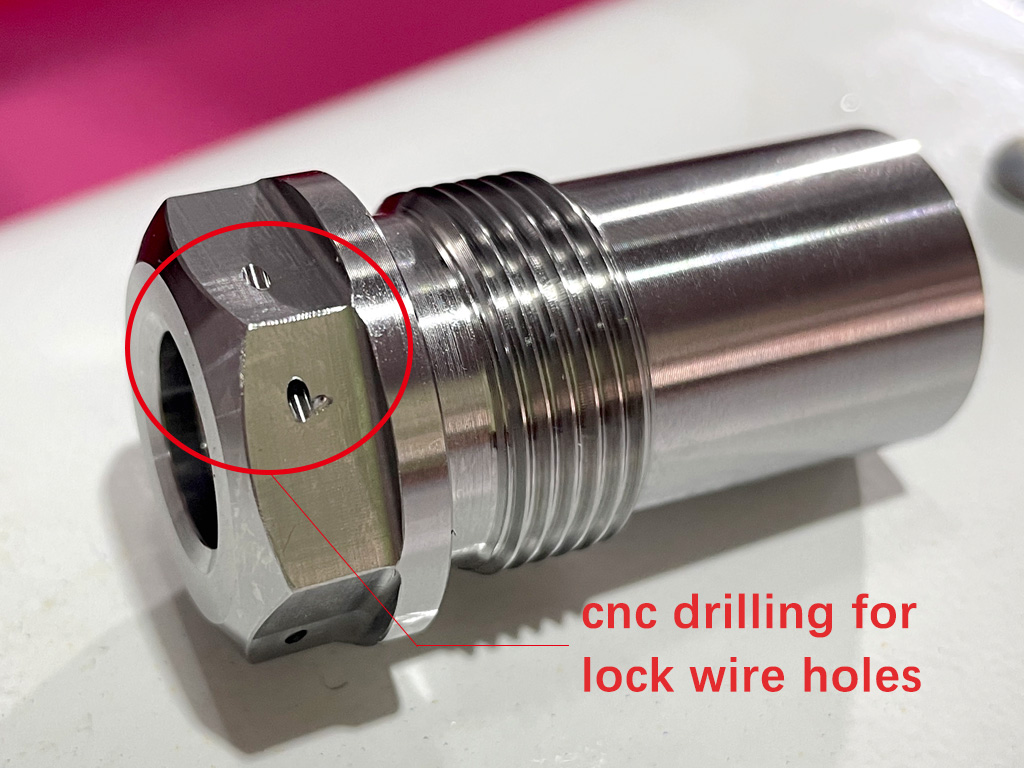
cnc drilling for lock wire holes
In aerospace systems, even the slightest loosening can lead to catastrophic consequences. Therefore, precision drilling of safety holes is mission-critical.
Why CNC Drilling Is Essential for Aerospace Bolts
Traditional drilling methods often fail to meet the tight tolerances and repeatability required in aerospace manufacturing. CNC drilling machines provide a superior solution.
Key Advantages of CNC Drilling:
1. Ultra-High Precision
CNC machines can achieve micron-level accuracy, ensuring consistent hole diameter, depth, and positioning.
2. Repeatability at Scale
Ideal for batch production of aerospace fasteners with identical specifications.
3. Automation and Efficiency
Reduces human error and increases productivity with automated drilling cycles.
4. Complex Angle Drilling Capability
Allows drilling at precise angles for specialized bolt designs.
5. Compatibility with Hard Materials
Handles aerospace-grade materials such as:
Titanium alloys
Stainless steel
High-strength alloy steel
Technical Challenges in Drilling Safety Wire Holes
Despite the advantages, drilling safety holes in aerospace bolts is not without challenges:
1. Small Diameter Holes
Typical hole diameters range from 0.5 mm to 2 mm, requiring high spindle speeds and stable tooling.
2. Hard Materials
Aerospace bolts are often made from heat-resistant and high-strength materials that are difficult to machine.
3. Tool Breakage Risk
Micro-drills are prone to breakage without proper speed, feed rate, and cooling.
4. Precision Positioning
The hole must be perfectly aligned to ensure proper safety wire installation.
Advanced CNC Solutions for Aerospace Bolt Drilling
Modern CNC drilling machines are equipped with advanced technologies to overcome these challenges:
High-Speed Spindle Systems
Spindle speeds up to 50,000–60,000 RPM enable efficient micro-hole drilling.
Servo-Controlled Feed Systems
Ensure precise control over feed rates, reducing tool wear and improving hole quality.
Multi-Axis Positioning
Allows drilling at multiple angles and orientations in a single setup.
Intelligent Cooling Systems
Use mist or oil-based cooling to extend tool life and improve surface finish.
Tool Breakage Detection
Automatically stops the machine if a drill breaks, minimizing damage and waste.
Industry Applications
CNC drilling safety wire holes is widely used across aerospace and related industries:
Aircraft engine fasteners
Structural bolts in fuselage assemblies
Landing gear components
Military aviation hardware
Spacecraft fastening systems
These applications demand zero-defect manufacturing, making CNC drilling the preferred solution.
Best Practices for CNC Drilling Safety Holes
To achieve optimal results, manufacturers should follow these proven practices:
1. Use High-Quality Micro Drills
Choose carbide drills designed for high-speed and high-precision applications.
2. Optimize Cutting Parameters
Carefully set spindle speed, feed rate, and peck drilling cycles.
3. Ensure Proper Fixturing
Secure the bolt firmly to avoid vibration and misalignment.
4. Implement Cooling and Lubrication
Use appropriate coolant to reduce heat and extend tool life.
5. Regular Machine Calibration
Maintain accuracy through routine inspection and calibration.
Quality Standards and Compliance
Aerospace manufacturing must comply with strict international standards, including:
AS9100 Quality Management System
ISO 9001 Certification
NADCAP Special Process Accreditation
CNC drilling processes must be validated and documented to ensure full traceability and compliance.
Why Choose Advanced CNC Drilling Machines?
For manufacturers seeking a competitive edge, investing in advanced CNC drilling equipment offers:
Higher production efficiency
Lower defect rates
Consistent product quality
Reduced labor costs
Faster ROI through automation
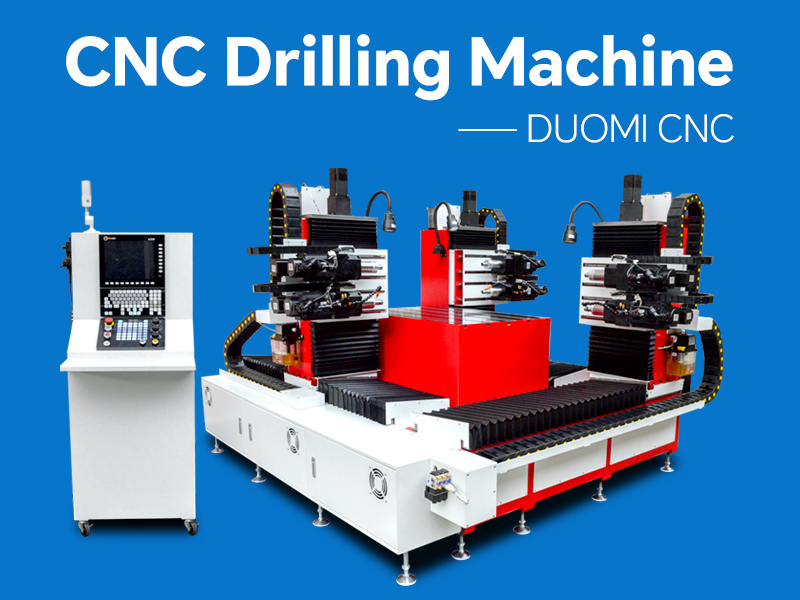
Companies like DUOMI CNC specialize in high-precision drilling and tapping solutions tailored for demanding applications such as aerospace fastener machining.
CNC drilling safety wire holes in aerospace bolts is a highly specialized process that plays a crucial role in ensuring flight safety and mechanical reliability. With the increasing demand for precision and efficiency, CNC technology has become indispensable in modern aerospace manufacturing.
By leveraging advanced equipment, optimized processes, and strict quality control, manufacturers can achieve superior results and meet global aviation standards.
FAQs
Q1: What is the typical diameter of safety wire holes in aerospace bolts?
A: Usually between 0.5 mm and 2 mm, depending on bolt size and application.
Q2: Why is CNC drilling preferred over manual drilling?
A: CNC drilling offers higher precision, repeatability, and efficiency, which are essential in aerospace manufacturing.
Q3: What materials are commonly used for aerospace bolts?
A: Titanium alloys, stainless steel, and high-strength alloy steel.
Q4: How can tool breakage be minimized?
A: By optimizing cutting parameters, using high-quality tools, and implementing proper cooling systems.