Precision Micro-Hole Perforation in Aluminum Bluetooth Speaker Housings
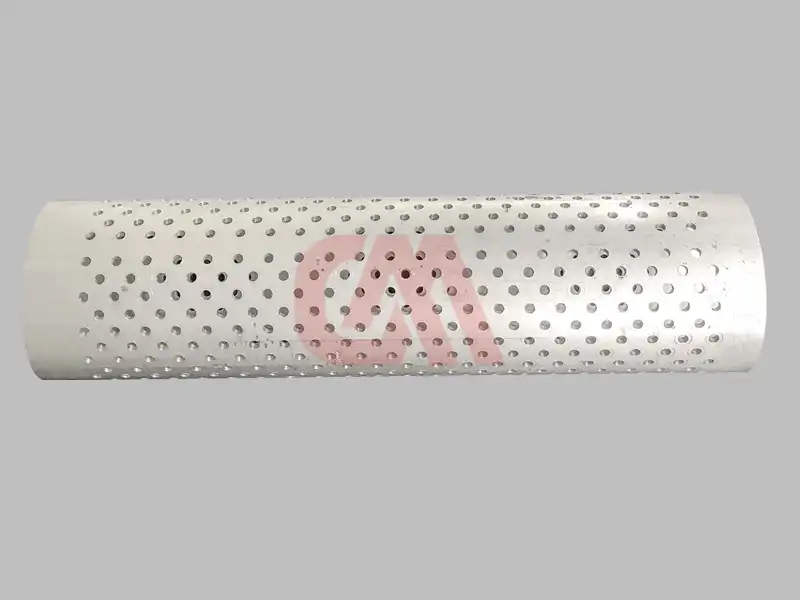
In modern acoustic engineering, an anodized 6061 aluminum Bluetooth speaker housing serves a dual purpose: it acts as a structural acoustic chamber and a premium visual element. Achieving peak audio clarity requires dense arrays of sound-transmitting micro-holes—often ranging from 0.5 mm to 1.2 mm in diameter—drilled across complex curved geometries.
To ensure acoustic transparency without compromising mechanical integrity, precision CNC micro-drilling must maintain tight dimensional tolerances (ISO 2768-m fine standard, position tolerance within ±0.01 mm).
+-----------------------------------------------------------------------+
|                   KEY PROCESS PARAMETERS (MICRO DRILLING)             |
+-------------------+---------------------------------------------------+
| Spindle Speed     | 45,000 RPM (High-Speed Direct-Drive Spindle)       |
| Feed Rate         | F1500 mm/min                                      |
| Material Grade    | Aluminum Alloy 6061-T6                            |
| Hole Diameter     | 0.70 mm (±0.005 mm tolerance)                      |
| Drilling Depth    | 2.32 mm (Aspect Ratio ~3.3:1)                     |
| Coolant System    | Minimum Quantity Lubrication (MQL) / Alcohol Mist |
| Target Application| Bluetooth speakers, soundbars, acoustic grilles   |
+-------------------+---------------------------------------------------+
1. Technical Challenges in Dense Aluminum Acoustic Perforation
Mass-producing high-density acoustic perforation arrays on aluminum enclosures introduces several metallurgical and mechanical obstacles:
A. Burr Formation at Hole Exit Points
Aluminum alloys like 6061-T6 exhibit high ductility. During drill breakthrough, material displacement creates exit burrs exceeding 0.05 mm, which block sound transmission and ruin anodized surface finishes. Controlling burr height below 0.01 mm is critical.
B. Tool Wear and Micro-Drill Breakage
Drilling thousands of contiguous 0.7 mm holes subjects tungsten carbide micro-drills to extreme torsional fatigue. Excessive radial runout (>0.003 mm) leads to immediate drill breakage, halting continuous automated cycles.
C. Thermal Expansion and Pitch Misalignment
High-density patterns generate concentrated friction heat. Uncontrolled heat leads to localized thermal expansion of the aluminum workpiece, causing cumulative center-to-center pitch distortion across expansive hole arrays.
[Micro-Drill Engagement] ---> [Built-up Edge (BUE) Formation] ---> [Tool Jamming / Snap]
                                         │
                                         └--> Solution: 45k RPM + MQL + Peck Cycle Strategy
2. Why Conventional Machining Methods Fail
Traditional manufacturing methods fall short when balancing speed, accuracy, and flexbility for acoustic mesh production:
| Process Method | Spindle/Tool Speed | Positioning Accuracy | Burr Control | Flexibility for Design Changes |
|---|---|---|---|---|
| Standard CNC Machining | 8,000–12,000 RPM | Moderate (±0.03 mm) | Poor (Heavy Exit Burrs) | High |
| Mechanical Stamping | N/A (Die Punching) | Low (Deforms Thin Walls) | Poor (Edge Deformation) | Low (Expensive Tooling) |
| Laser Micro-Perforation | Thermal Beam | Moderate (±0.02 mm) | Heat Affected Zone (HAZ) | High |
| High-Speed CNC Drilling (DUOMI) | 45,000 RPM | High (±0.005 mm) | Excellent (<0.01 mm Burr) | High (Direct CAD/CAM Code) |
- Standard CNCs lack the requisite RPM to maintain cutting velocities above 100 m/min for sub-millimeter drills, causing material tearing instead of clean shearing.
- Stamping deforms curved aluminum extrusions and distorts internal acoustic chamber volumes.
- Laser Cutting leaves oxidized edges and melt residues, which impair secondary chemical anodization processes.
3. High-Speed CNC Solution for Micro-Hole Perforation
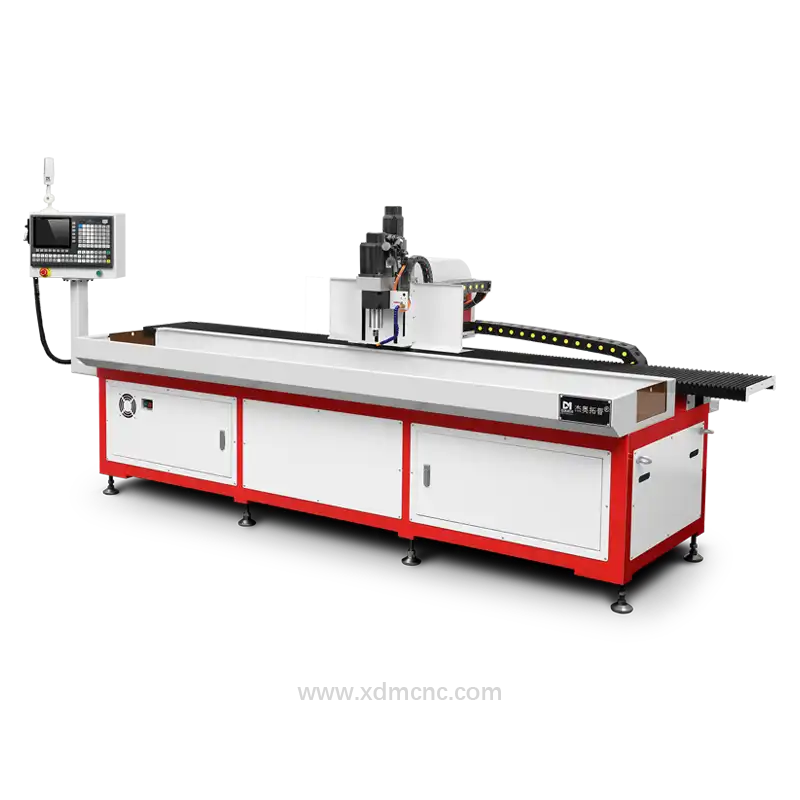
DUOMI CNC solves acoustic mesh production limits by integrating ultra-high-speed spindle dynamics, optimized peck-drilling algorithms, and rigid single-setup workholding.
Ultra-High Speed Spindles (up to 45,000 RPM)
Operating micro-drills at 45,000 RPM delivers optimal surface cutting speeds (Vc ≈ 100 m/min for 0.7 mm tools). Higher cutting velocities reduce radial cutting force by up to 40%, preventing drill deflection, eliminating built-up edge (BUE), and leaving smooth hole walls (Ra < 0.4 µm).
Single-Setup Multi-Axis Positioning
Utilizing multi-axis multi-head CNC drilling centers allows thousands of holes across planar and 3D contour surfaces to be completed in a single clamping operation. This eliminates cumulative clamping error, keeping overall hole array positioning within ±0.01 mm.
Peck Drilling Cycles with MQL Lubrication
Dynamic peck-drilling retracts the tool in increments (peck step = 0.5×D) to instantly evacuate chips before packing occurs. Paired with Minimum Quantity Lubrication (MQL) using alcohol-based micro-mist, chips are cooled and flushed instantly without leaving heavy oil residue on the acoustic panel.
Dynamic Tool Runout Monitoring
Maintaining spindle dynamic runout below 3 microns (≤0.003 mm) doubles micro-tool service life, enabling stable continuous machining across thousands of consecutive holes without unmonitored tool failures.
Summary of Manufacturing Benefits
- Yield Rates >99.5%: Uniform micro-holes free of exit burrs eliminate post-process manual de-burring.
- Optimized Cycle Times: High feed rate (F1500/min) cuts total perforation process time by over 60% compared to conventional CNC setups.
- Anodizing Ready: Clean cut surface without thermal oxidation or grease contamination facilitates direct entry into anodizing production lines.
Need High-Efficiency CNC Drilling & Tapping Machinery?
Consult with our senior application engineers to get a custom cycle time simulation and tailored machine proposal within 24 hours.