

The Ultimate Guide to CNC Drilling Machine: Features, Trends, Applications, Materials, Global Demand, Buying Tips & Usage | DUOMI CNC
Keywords: CNC drilling machine, CNC drilling machine applications, CNC drilling machine buying guide, DUOMI CNC
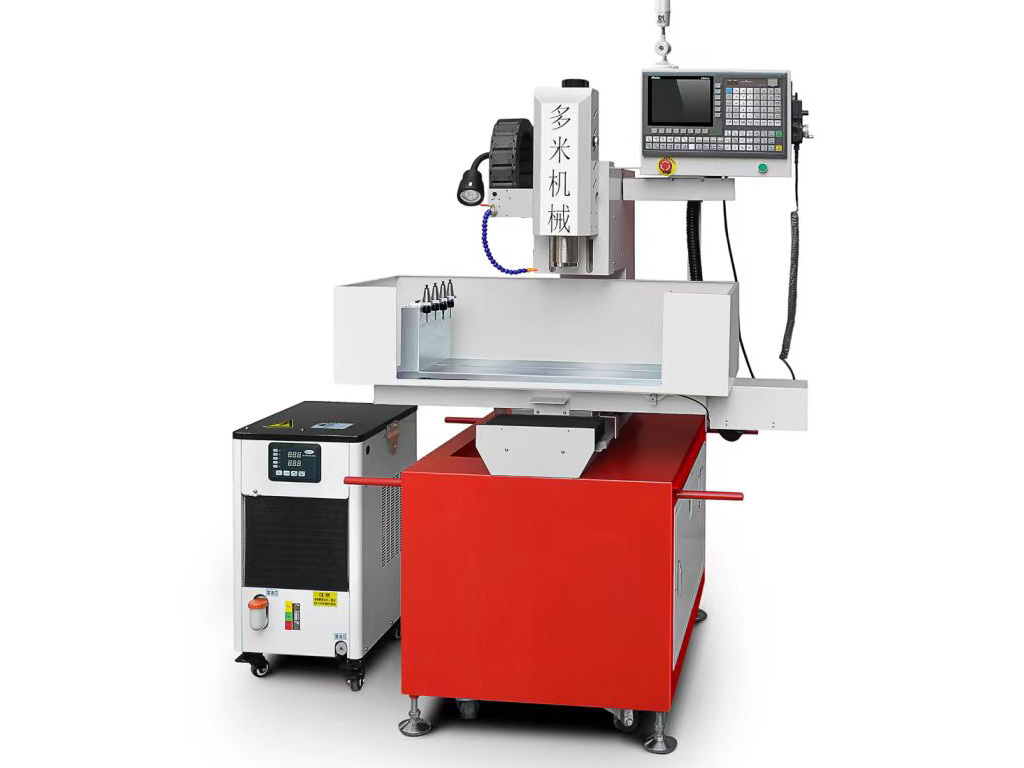
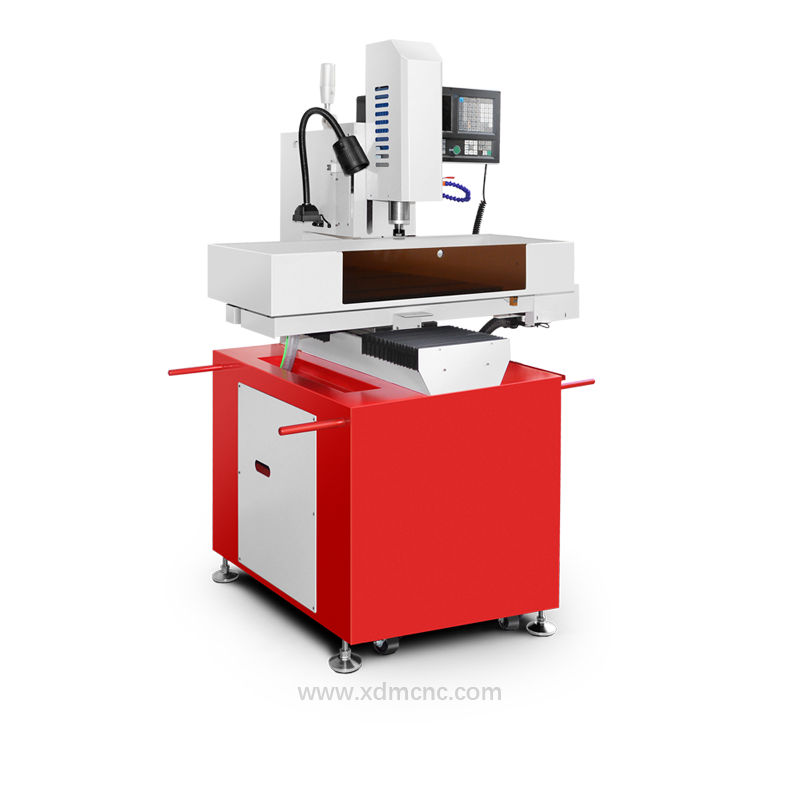
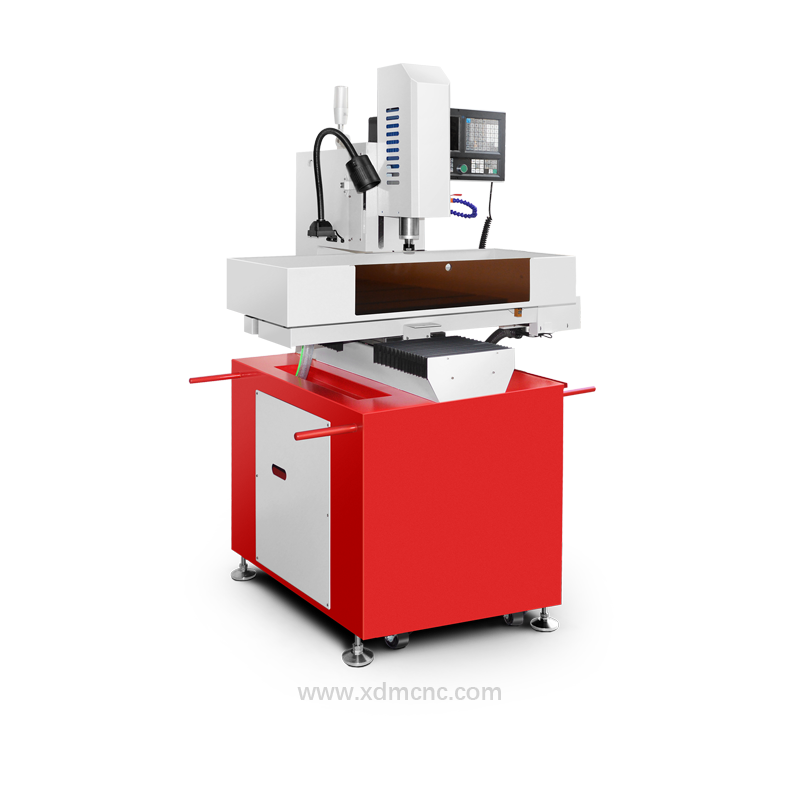
Small CNC drilling machine
In the modern manufacturing era, precision, speed, and automation are the cornerstones of productivity. Among the key technologies driving the transformation of metalworking and fabrication industries is the CNC drilling machine. A CNC drilling machine combines Computer Numerical Control (CNC) technology with advanced mechanical design to automate hole-making processes with unprecedented accuracy and efficiency. This comprehensive guide explores the features, future prospects, applications, material compatibility, global customer demands, buyer guidelines, and practical usage of CNC drilling machines — with insights into how DUOMI CNC has positioned itself as a leading innovator in the field.
1. What is a CNC Drilling Machine?
A CNC drilling machine is a computer-controlled piece of equipment designed to drill holes in metal, plastic, carbon fiber, or composite materials with high precision and repeatability. Unlike manual drilling setups, a CNC drilling machine uses programmed instructions (G-code) to control the movement of the drill bit, spindle speed, feed rates, and drilling sequence. The automation inherent in a CNC drilling machine makes it a vital component of modern production lines, especially in industries requiring tight tolerances and high-volume output.
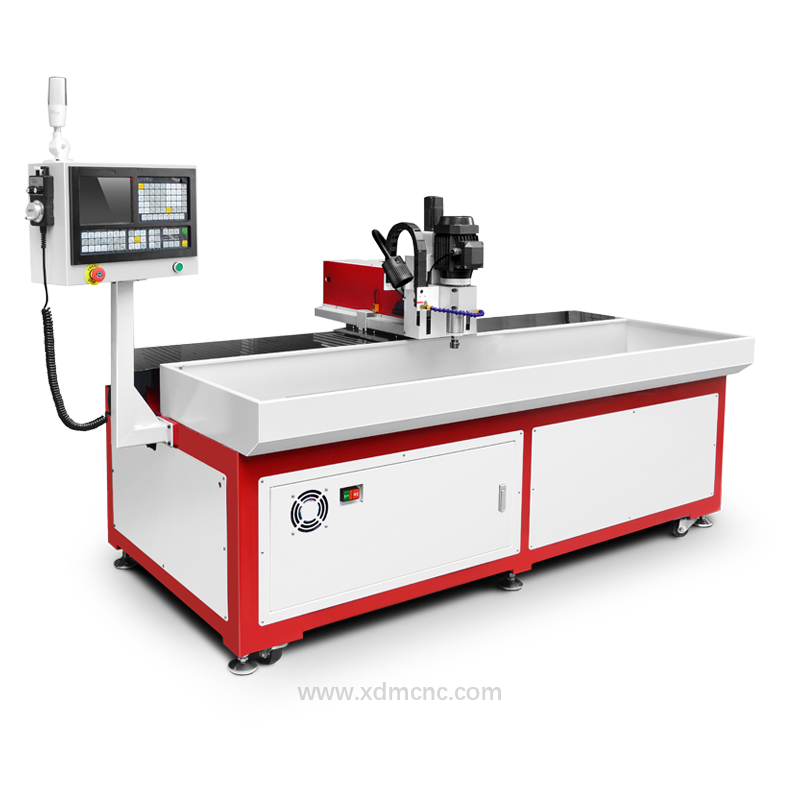
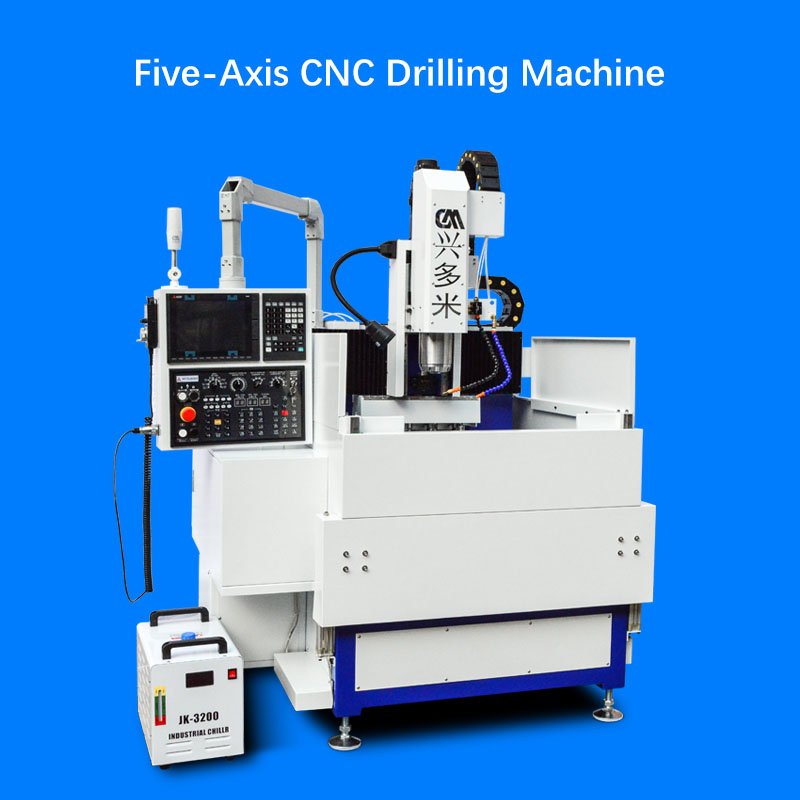
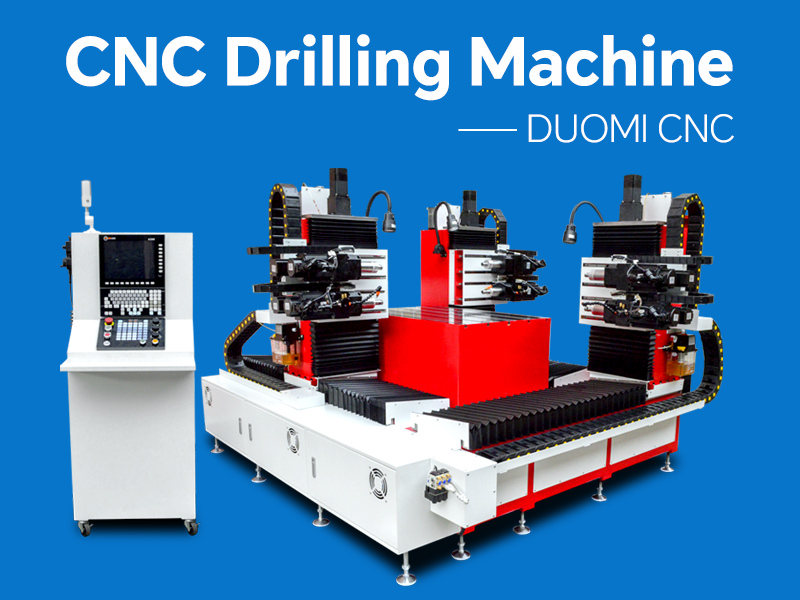
At its core, a CNC drilling machine consists of a rigid mechanical frame, a programmable controller, linear motion systems (such as ball screws or linear guides), a high-speed spindle, tool holders, and a user interface for program input. Advanced models may integrate features like multiple spindles, robotic loading systems, and automatic tool changers.
2. Key Features of Modern CNC Drilling Machines
Modern CNC drilling machines have evolved beyond basic hole-making tools. Today’s systems deliver a range of advanced features that enhance performance, reliability, and versatility.
2.1 High Precision & Repeatability
Precision is the defining advantage of a CNC drilling machine. Through closed-loop servo systems and accurate feedback control, a CNC drilling machine can achieve micron-level positioning accuracy. This ensures that every hole meets design specifications across thousands of cycles.
2.2 Automated Programming and Operation
A CNC drilling machine operates based on programmed instructions, which eliminates manual intervention and reduces human error. Operators input a drilling program via CAM software or a direct programming interface, and the machine executes the sequence consistently.
2.3 Multi-Spindle & Multi-Axis Capabilities
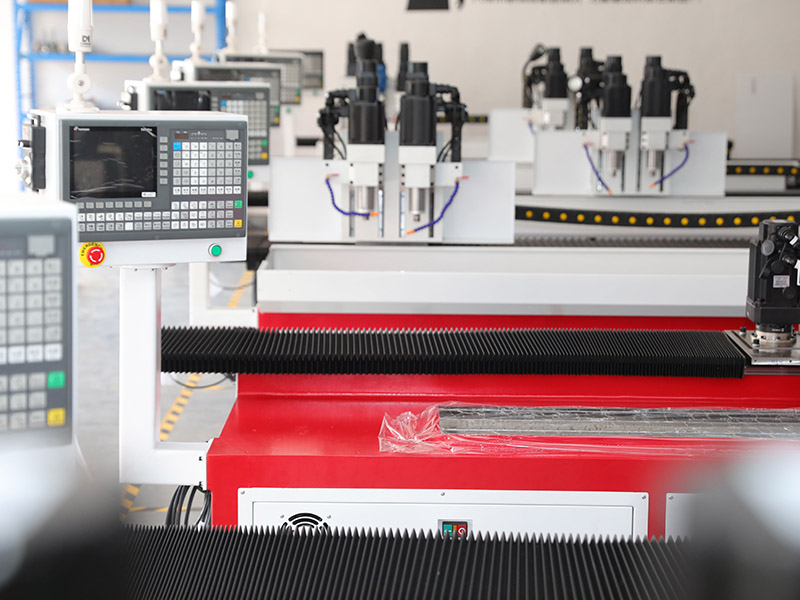
To speed up production, advanced CNC drilling machine models are equipped with multiple spindles that can drill several holes simultaneously. Some high-end systems even support multi-axis motion, enabling drilling on non-planar surfaces or complex profiles.
2.4 Integrated Tool Management
A modern CNC drilling machine often features automatic tool changers and tool monitoring systems. These capabilities ensure that the correct drill bit is used for each hole type and that tool wear is tracked to maintain quality.
2.5 Durability and Structural Stability
The mechanical design of a CNC drilling machine — including its frame, guides, and clamping systems — impacts long-term stability and production quality. Brand leaders such as DUOMI CNC invest in robust structural engineering to minimize vibration and maximize cutting accuracy.
2.6 Connectivity and Smart Manufacturing Integration
With the advent of Industry 4.0, many CNC drilling machines now support network connectivity, real-time monitoring, and data logging. These smart features enable predictive maintenance, remote diagnostics, and integration with MES (Manufacturing Execution Systems).
3. Development Trends and Future Outlook
The global market for CNC drilling machines is poised for significant growth as industries embrace automation and precision manufacturing. Several key trends are shaping the future of CNC drilling technology.
3.1 Intelligent Automation
Artificial intelligence (AI) and machine learning are beginning to influence how CNC drilling machines operate. These technologies help optimize drilling parameters, reduce cycle times, and improve surface quality.
3.2 Hybrid Manufacturing Systems
Integration with laser technology, additive manufacturing (3D printing), and robotic arms enables hybrid machining solutions. A CNC drilling machine may operate alongside other technologies, creating seamless production workflows.
3.3 Sustainable and Energy-Efficient Designs
Newer CNC drilling machines are built with energy recovery systems, efficient spindles, and eco-friendly operations in mind. This trend aligns with global sustainability goals and reduces the total cost of ownership.
3.4 Customized Solutions for Emerging Industries
Advanced industries such as electric vehicles, aerospace, and renewable energy require specialized hole-making solutions. The future of CNC drilling machines lies in customization — tailored spindle designs, adaptive fixtures, and specific tooling packages.
3.5 Global Supply Chain Integration
As manufacturing becomes more interconnected, CNC drilling machine vendors will expand digital services, remote support, and global logistics to meet diverse customer needs.
4. Key Applications of CNC Drilling Machines
CNC drilling machines serve a wide range of applications across multiple industries. Their ability to deliver consistent quality at high speed makes them indispensable.
4.1 Automotive Manufacturing
In automotive assembly, a CNC drilling machine is used for:
Engine components
Gearbox housings
Suspension parts
Chassis frames
High precision and repeatability are essential — a CNC drilling machine ensures exact hole placement for fasteners and alignment features.
4.2 Furniture and Metal Fabrication
Metal furniture frames, shelves, brackets, and structural supports often require multiple holes in tube profiles or sheet metal. A CNC drilling machine optimizes these processes and boosts throughput.
4.3 Aerospace and Defense
Aircraft fuselage panels, control surfaces, and structural components depend on CNC drilling accuracy for safety-critical fastening. The ability to handle complex profiles is essential.
4.4 Construction and Architectural Metalwork
CNC drilling machines process:
Steel beams and columns
Aluminum extrusions
Connector plates
Metallic façade elements
Accurate drills ensure structural integrity and fit consistency.
4.5 Electronics and Electrical Enclosures
Smaller, precise holes needed in instrument panels, enclosures, and heat sink assemblies make CNC drilling machines ideal in the electronics industry.
4.6 Renewable Energy Components
From solar mounting systems to wind turbine housings, CNC drilling machines create efficient mounting points with accuracy critical to performance.
5. Materials Compatible with CNC Drilling Machines
One of the strengths of a CNC drilling machine is its versatility across materials. From soft alloys to hardened steels, a CNC drilling machine can handle diverse material types with the right tooling and setup.
5.1 Aluminum and Aluminum Alloys
Aluminum is a common material in aerospace, automotive, and construction. Its light weight and machinability make aluminum an ideal candidate for CNC drilling. With proper coolant and sharp tooling, a CNC drilling machine delivers burr-free holes and superior surface finish.
5.2 Steel and Stainless Steel
Steel components often require robust drilling solutions. A CNC drilling machine optimized with carbide drills and rigid fixtures can process mild steel and stainless steel with high reliability.
5.3 Titanium and Exotic Alloys
High-performance industries such as aerospace and medical devices use titanium and high-temperature alloys. A CNC drilling machine with specialized tooling and coolant control ensures accurate hole-making in these challenging materials.
5.4 Composites and Plastics
Composite panels and reinforced plastics are increasingly used in lightweight structures. With appropriate feed rates and tooling, a CNC drilling machine can process these materials without delamination or fiber pull-out.
5.5 Metal and Non-Metal Materials
Metalworking applications can also benefit from CNC drilling machines, especially in furniture production or decorative metalwork inserts.
6. Global Demand and Customer Requirements
The demand profile for CNC drilling machines varies by region, driven by industrial infrastructure, manufacturing maturity, and automation adoption rates.
6.1 North America
Manufacturers in the United States and Canada prioritize high-precision CNC drilling machines with robust automation features. Automotive clusters, aerospace hubs, and industrial fabrication plants widely use CNC drilling machines that integrate with digital manufacturing systems.
6.2 Europe
European customers often require energy-efficient designs and compliance with strict safety standards. CNC drilling machines used in Germany, Italy, and the UK are frequently paired with advanced monitoring systems and high-speed spindles.
6.3 Asia-Pacific
In China, Japan, and South Korea, the demand for CNC drilling machines spans from heavy industries to consumer electronics. Cost-effectiveness, flexibility, and high throughput are key customer priorities. DUOMI CNC has seen rapid adoption in Asia due to its balance of quality, customization, and support.
6.4 Latin America
Manufacturers in Mexico and Brazil often seek CNC drilling machines that provide durability in harsh shop environments and ease of maintenance. Local service networks and spare parts availability influence purchasing decisions.
6.5 Middle East & Africa
In emerging markets, CNC drilling machines are valued for their ability to modernize traditional fabrication shops, improve productivity, and reduce skilled labor dependency.
7. CNC Drilling Machine Buying Guide: What to Look For
Choosing the right CNC drilling machine requires understanding your production needs, material mix, and workflow. Here’s a structured guide to help you make an informed decision.
7.1 Production Volume and Speed Requirements
If your operation requires high-volume drilling with minimal downtime, consider a CNC drilling machine with:
Multi-spindle configurations
Automated tool changers
Quick fixture change systems
7.2 Precision and Tolerance Specifications
Assess the hole position tolerance your products demand. A CNC drilling machine with high-accuracy linear guides and servo feedback systems will ensure consistent results.
7.3 Material Range and Tooling Options
Choose a CNC drilling machine that supports:
Carbide tooling
Coolant delivery systems
Tool monitoring
These features help optimize performance across different materials.
7.4 Automation and Integration
If your factory uses automated material handling, look for a CNC drilling machine that can integrate with:
Robotic loaders
MES / ERP systems
Real-time monitoring software
7.5 Service, Support, and Spare Parts
Reliable after-sales support is essential. Brands like DUOMI CNC offer global technical assistance, spare parts networks, and user training — factors that significantly reduce downtime.
7.6 Total Cost of Ownership (TCO)
Beyond the purchase price, consider:
Energy consumption
Tooling costs
Maintenance expenses
Training and support costs
A well-engineered CNC drilling machine can reduce TCO over its lifecycle.
8. Step-by-Step Usage Guide for CNC Drilling Machines
To get the most out of your CNC drilling machine, follow a structured setup and operation process.
8.1 Program Preparation
Import the drilling design into CAM software
Define hole coordinates, depths, and sequences
Generate G-code specific to your CNC drilling machine
8.2 Machine Setup
Secure the workpiece using appropriate clamps or fixtures
Install the correct drill bit and verify alignment
Set work zero and tool offsets
8.3 Dry Run and Verification
Perform a simulation run without cutting to:
Check for collisions
Verify the drilling path
Confirm program logic
8.4 Actual Drilling Operation
Start spindle at recommended speed
Engage feed rate appropriate for material
Monitor coolant flow and chip evacuation
8.5 Quality Inspection
Check hole diameter, position, and surface finish using:
Calipers or micrometers
Coordinate Measuring Machines (CMM)
Visual inspection
8.6 Maintenance and Care
Routine tasks for your CNC drilling machine:
Clean metal chips and debris daily
Check lubrication levels
Inspect tool wear regularly
Schedule preventive maintenance
9. Why Choose DUOMI CNC Drilling Machines?
DUOMI CNC stands out in the competitive landscape of CNC drilling machines due to:
Industry-proven mechanical designs
High-precision control systems
Flexible customization options
Strong global service network
Competitive pricing with premium quality
Seamless integration with automation workflows
Whether you produce structural tubing, precision components, or complex assemblies, DUOMI CNC drilling machines deliver reliable performance and operational excellence.
The CNC drilling machine is an essential asset for manufacturers aiming to enhance quality, increase throughput, and reduce labor dependency. From automotive to aerospace, furniture to renewable energy, the applications of CNC drilling machines continue to expand. Understanding features, markets, materials, and best practices empowers decision-makers to choose the right system and fully leverage CNC automation.
As industries move toward smart, connected, and automated production, the role of the CNC drilling machine — especially advanced models from providers like DUOMI CNC — will only grow stronger in the global manufacturing ecosystem.