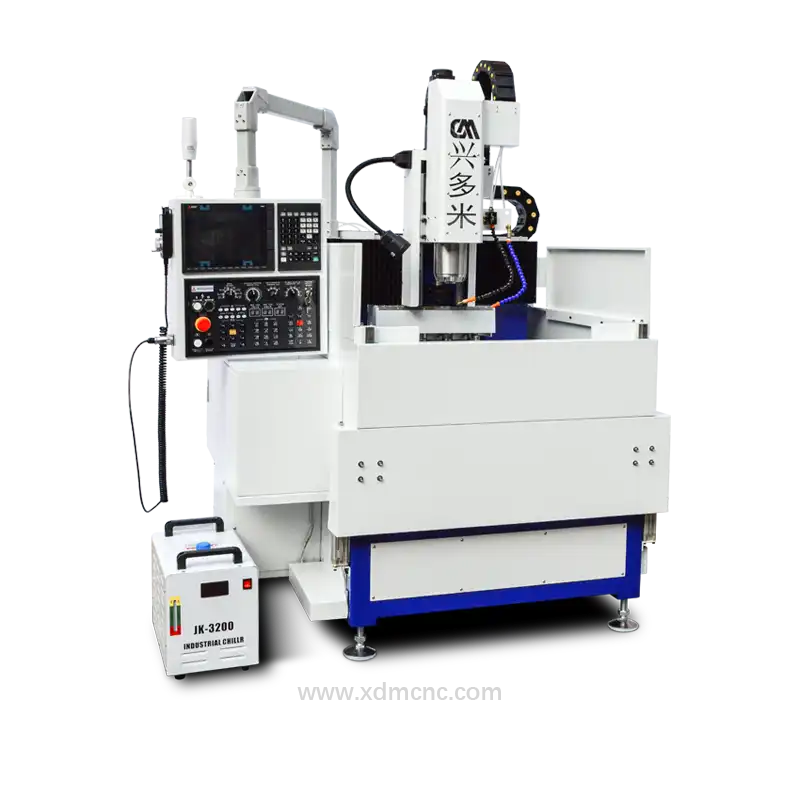
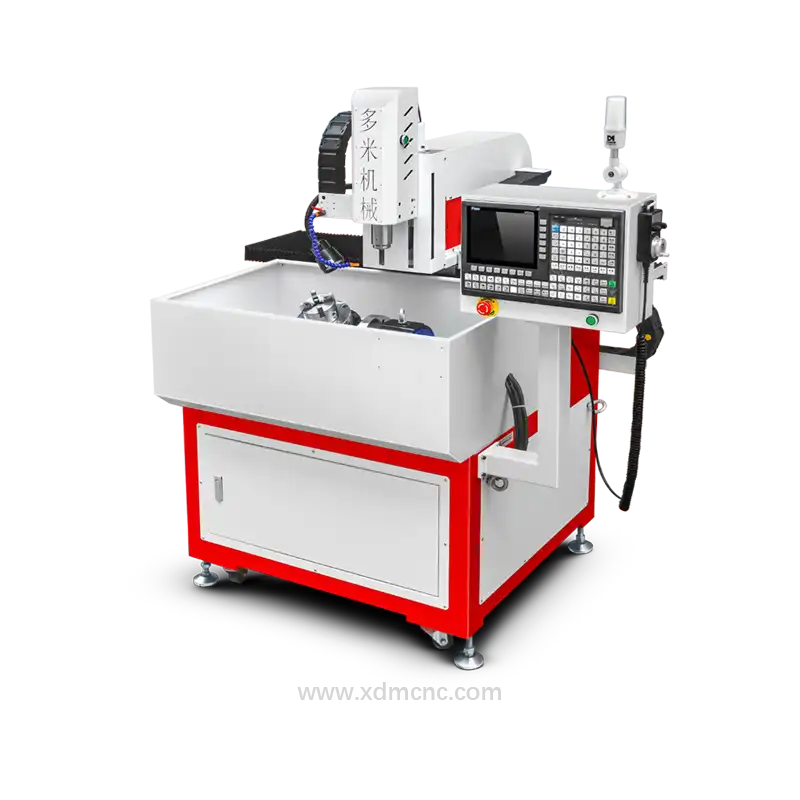
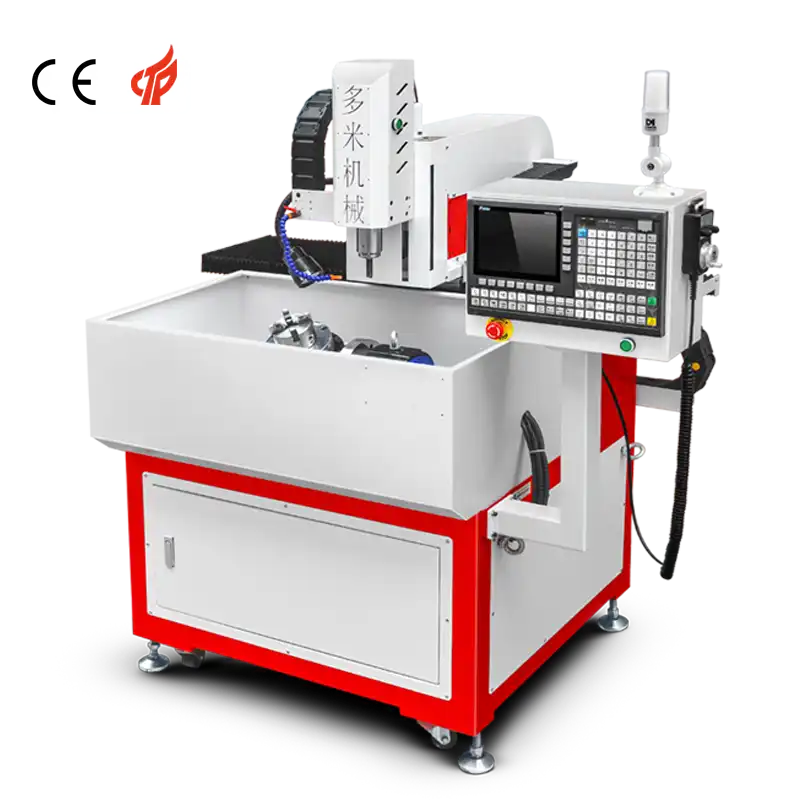
Gas stove burner caps (burner covers) play a crucial role in gas distribution and flame stability. Manufactured primarily from high-hardness, heat-resistant materials such as gray cast iron (e.g., HT200/HT250), 304/316 stainless steel, and brass or copper alloys, these components demand exceptional dimensional accuracy and hole uniformity. Advanced CNC drilling solutions for burner caps are critical to achieving defect-free micro-hole arrays, high throughput, and lower tooling costs.
1. Equipment Selection for Burner Cap Machining
Selecting the correct machine tool geometry and dynamic stability directly impacts hole circularity, wall finish, and cycle time.
CNC Drilling & Tapping Machines
- High Dynamics & Precision: Dedicated high-speed drilling and tapping centers (such as the DUOMI XD Series) feature rigid C-frame or gantry architectures, direct-drive spindles (10,000–24,000 RPM), and fast automatic tool changers (ATC).
- Multi-Hole Automation: Integrated rotary tables (4th/5th axis) allow simultaneous multi-angle drilling for circumferential gas flame ports.
- Operational Efficiency: Substantially reduces cycle times compared to general-purpose vertical machining centers (VMCs).
Laser Drilling Systems
- Micro-Hole Capabilities: Ideal for specialized high-hardness alloys requiring hole diameters below 0.3 mm.
- Non-Contact Processing: Eliminates tool wear and mechanical stress, though capital expenditure is significantly higher.
High-Speed Drilling & Milling Centers
- Multi-Tasking Capability: Combines high-speed port drilling with secondary milling operations, such as cutting perimeter cooling grooves, pilot flame slots, or mounting steps in a single setup.
2. Cutting Tool Selection & Material Compatibility
Burner cap drilling involves interrupted cuts, abrasive materials, and deep-hole or micro-hole geometries. Optimizing tool substrates and coatings is vital for tool longevity.
| Workpiece Material | Recommended Tool Material | Coating Type | Optimal Spindle Speed (RPM) | Feed Rate (mm/min) | Coolant Strategy |
|---|---|---|---|---|---|
| Cast Iron (HT200/250) | Solid Carbide / PCD | TiAlN / AlTiN | 8,000 – 12,000 | 200 – 500 | Wet / High-Pressure Emulsion |
| Stainless Steel (304/316) | Ultra-Fine Carbide | TiAlN / AlCrN | 6,000 – 10,000 | 100 – 300 | High-Pressure Coolant (≥20 bar) |
| Brass / Copper Alloy | Carbide / PCD | DLC or Uncoated | 12,000 – 18,000 | 300 – 800 | Flood / MQL (Minimum Quantity Lubrication) |
Tool Options:
- TiAlN-Coated Carbide Drills: Provide low thermal conductivity, high oxidation resistance up to 800°C, and excellent abrasive wear resistance for cast iron and stainless steel.
- PCD (Polycrystalline Diamond) Drills: Best suited for high-volume copper alloy or composite cap processing, delivering 5x–10x longer service life.
- Micro-Drills (<0.5 mm Diameter): Engineered with reinforced shanks and specialized point geometries (135°/140° split point) to prevent deflection and drill breakage.
3. Optimized Machining Process & Parameters
Precision Fixture Engineering
- Custom Pneumatic & Vacuum Fixtures: Designed to match the outer contour of the burner cap, providing uniform clamping force without distorting thin-walled sections.
- Zero-Point Clamping Systems: Enables rapid part changeovers and repeatable location accuracy within ±0.005 mm.
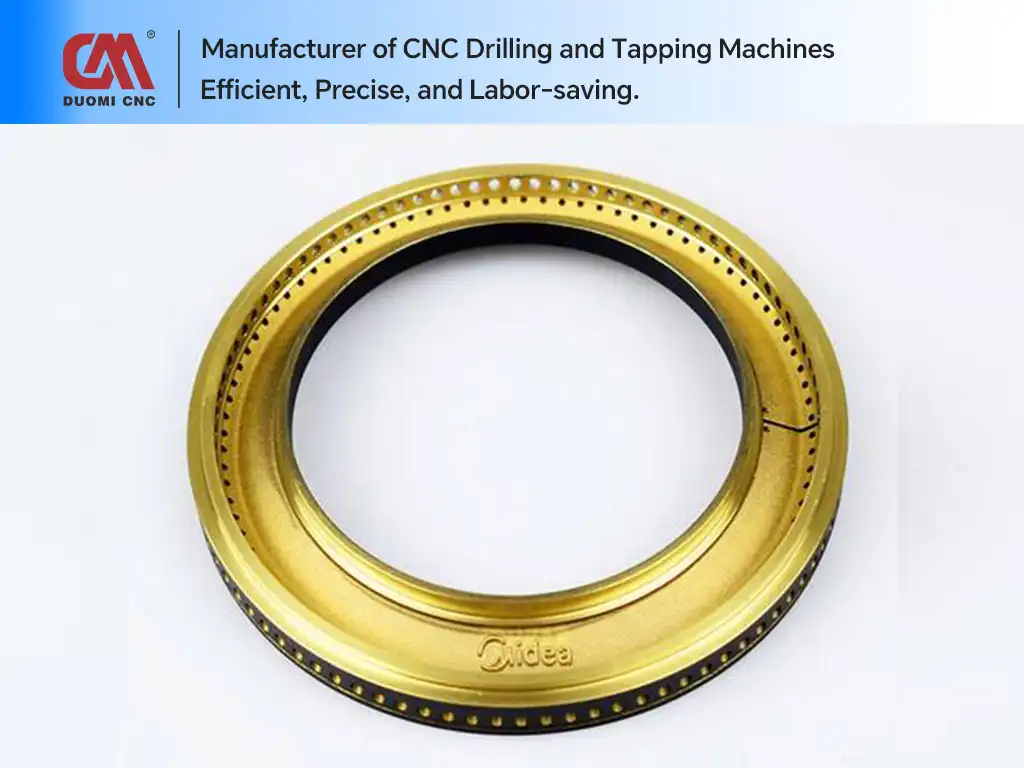
Recommended Drilling Techniques
- Peck / Step Drilling Cycles (G83/G73): Essential for evacuating chips when drilling deep or narrow burner ports, preventing chip clogging and tool failure.
- Through-Spindle Coolant (TSC): High-pressure coolant delivery directly at the cutting edge clears chips instantly and maintains thermal equilibrium.
Deburring & Finishing Standards
- Precision mechanical deburring tools, thermal energy deburring (TEM), automated wire brushing, and ultrasonic bath cleaning ensure burr-free port edges for precise gas flame distribution.
4. Automation & Smart Manufacturing Integration
To achieve industry 4.0 standards in mass production of burner caps, modern production lines integrate smart automation:
- Robotic Loading/Unloading: Articulated or gantry robots reduce non-cutting time and human intervention.
- In-Line Machine Vision Inspection: High-resolution optical sensors automatically verify hole diameter, concentricity, and missing holes according to ISO 2768-m tolerances.
- MES Integration: Seamless connectivity with Manufacturing Execution Systems for real-time tool wear monitoring, spindle load tracking, and yield analysis.
Explore our high-performance CNC drilling equipment to enhance your production capacity, or contact our engineering team for customized tooling and process optimization.
Need High-Efficiency CNC Drilling & Tapping Machinery?
Consult with our senior application engineers to get a custom cycle time simulation and tailored machine proposal within 24 hours.