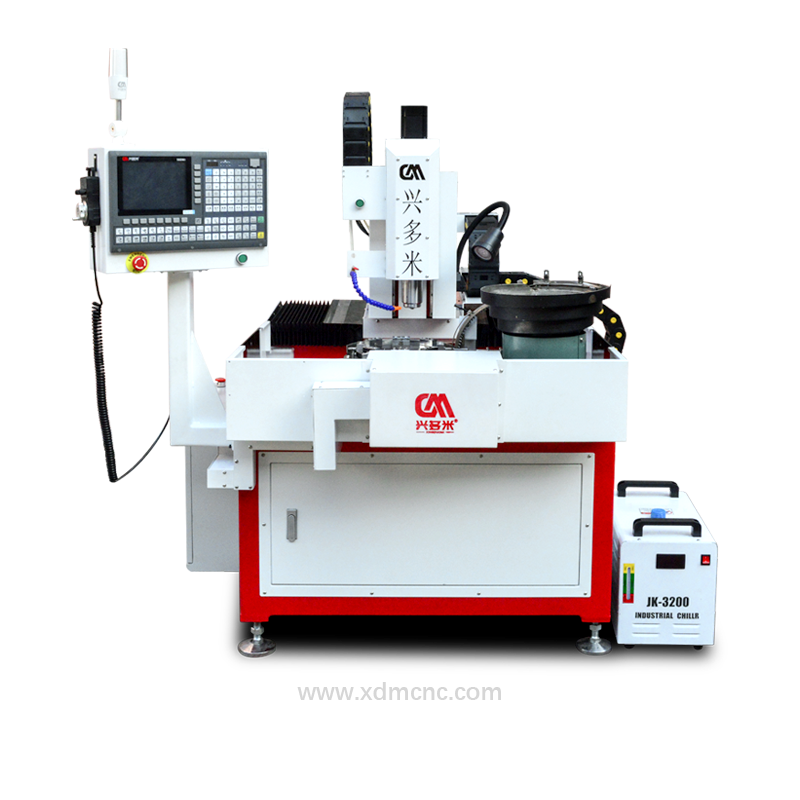
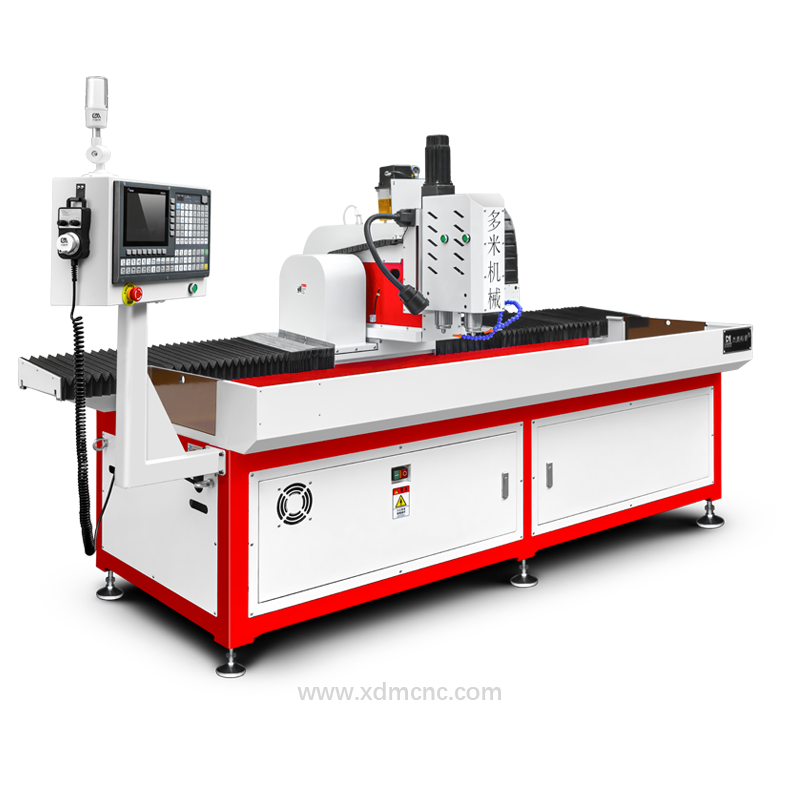
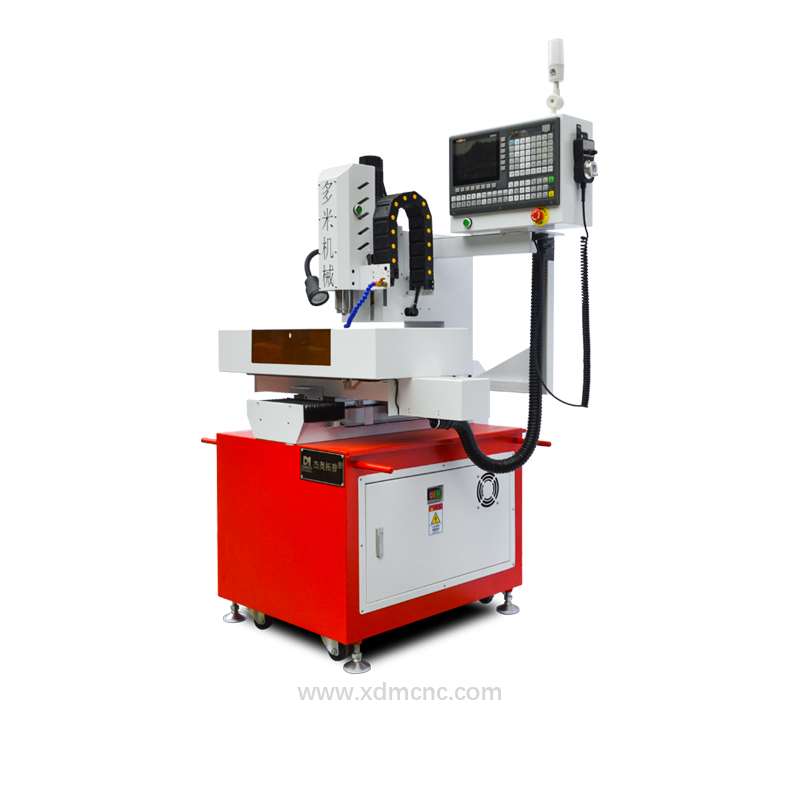
In the era of micro-component miniaturization across aerospace, surgical implants, electronics, and precision automotive valves, conventional CNC machining centers reach their physical limits when producing holes smaller than 1.0 mm. A dedicated micro hole drilling machine is a specialized CNC machine tool architected from the ground up to conquer the microscopic cutting forces, extreme rotational velocity requirements, and delicate tool geometries inherent to micro-machining.
While cutting parameters, chip morphology, and flute physics are thoroughly detailed in our micro drilling and micro hole drilling process guide, this article focuses on the machine tool hardware architecture, mechanical subsystems, and equipment selection criteria needed for reliable production.
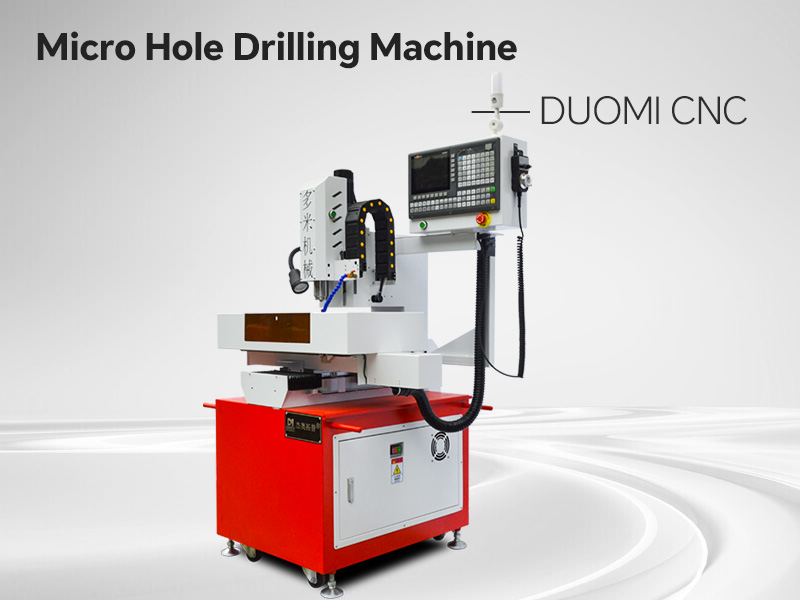
Figure 1: High-precision DUOMI CNC micro hole drilling machine configured with ultra-high-speed motorized spindles and automated clamping.
Anatomical Architecture of an Industrial Micro Hole Drilling Machine
A modern industrial micro hole drilling machine differs fundamentally from general-purpose milling and drilling centers in four core mechanical areas:
1. Ultra-High-Speed Electric Motorized Spindles
Micro carbide drills (0.05 mm – 1.0 mm) require linear peripheral cutting speeds that only spindle frequencies exceeding 24,000 to 60,000 RPM can provide. DUOMI machines utilize synchronous built-in motorized electric spindles featuring hybrid ceramic ball bearings, dynamic balancing to G0.4 grade, and recirculating closed-loop chillers that maintain temperature stability within ±0.5°C.
2. High-Rigidity Anti-Vibration Base Frame
At 60,000 RPM, even microscopic structural resonance will snap solid carbide micro-drills within milliseconds. DUOMI engineers use heavily ribbed Meehanite casting with natural aging and stress relief, paired with ultra-wide C3 preloaded linear roller guideways and precision ground ball screws.
3. Sub-Micron Motion & Closed-Loop Feedback
Achieving consistent micro hole circularity and true position requires precise micro-step feeding. High-resolution absolute optical scales provide closed-loop linear feedback down to 0.1 μm resolution, ensuring repeatability within ±0.005 mm across the entire working stroke.
4. Non-Contact Optical Laser Tool Verification
Micro-drills cannot be reliably checked with mechanical touch probes without risk of chipping the cutting edges. DUOMI incorporates high-speed non-contact laser tool inspection systems that verify tool length, diameter, and breakage status before and after each cycle in less than 0.3 seconds.
DUOMI Micro Hole Drilling Machine Specifications Comparison
Depending on your manufacturing volume and part geometry, DUOMI offers tailored standard and multi-spindle machine platforms:
| Machine Model / Series | Spindle Configuration & Max RPM | Working Travel (X / Y / Z) | Optimal Hole Diameter Range | Best Production Applications |
|---|---|---|---|---|
| Micro Holes CNC Drill | Single High-Speed Spindle (60,000 RPM) | 400 × 300 × 200 mm | 0.05 mm – 1.5 mm | Medical surgical tools, PEEK microfluidic blocks, fiber optic ferrules |
| Double Spindle Micro Drill | Dual Synchronized Spindles (40,000 RPM) | 600 × 400 × 250 mm | 0.1 mm – 2.0 mm | Dual-station automotive sensor brackets, aluminum heat sinks |
| Auto Parts Micro Drill | Multi-Spindle Custom Array (30,000 RPM) | 800 × 500 × 300 mm | 0.3 mm – 3.0 mm | Automotive fuel injection rails, braking valve bodies, mass production |
| Multi-Axis CNC Micro Center | 4-Axis / 5-Axis Rotary Indexing (40,000 RPM) | Custom Travel Envelope | 0.1 mm – 2.5 mm | Complex 3D curved surfaces, aerospace turbine blades, impellers |
Production Application Case Studies
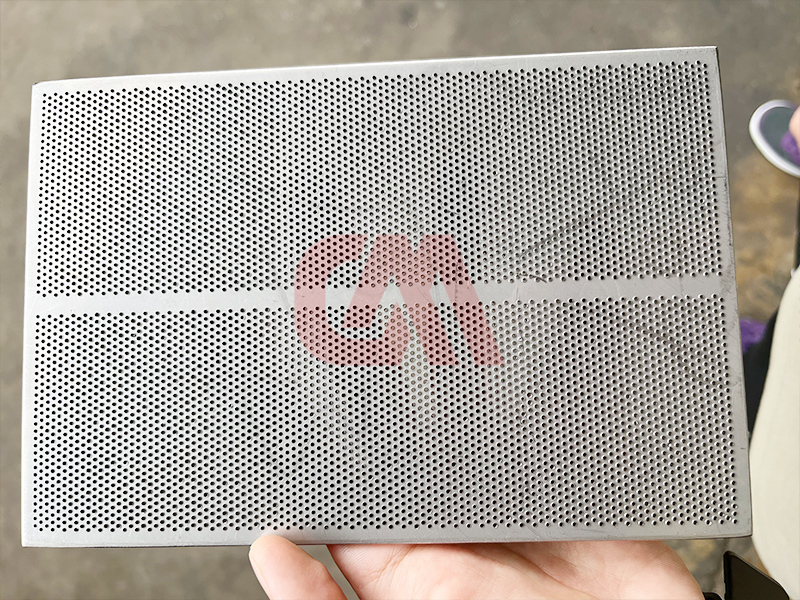
Figure 2: Micro hole matrix drilling on 316L stainless steel plates maintaining zero burrs and consistent hole roundness.
- Electronic Heat Dissipation Plates: A leading electronics manufacturer deployed the DUOMI Double Spindle CNC Micro Drilling Machine to drill 1,200 micro-holes (0.35 mm diameter) across 6061-T6 aluminum plates. By drilling two plates concurrently at 48,000 RPM with MQL mist lubrication, overall cycle time decreased by 52% and tool breakage dropped below 0.01%.
- Automotive Common-Rail Orifices: Processing high-hardness alloy steel orifices requires rigid peck cycles and zero spindle vibration. Our micro drilling system produced 0.25 mm metering holes with dimensional tolerance within ±0.004 mm and surface finish Ra 0.4 μm.
Engineering Checklist for Buying a Micro Hole Drilling Machine
When drafting your equipment acquisition specifications, verify these key engineering capabilities:
- Spindle Runout (T.I.R.): Insist on test verification showing tool tip runout under 0.003 mm at full operating RPM.
- Peck Cycle Interpolation: Ensure the CNC controller supports micro-peck cycles with programmable retract velocities down to 1 μm resolution.
- Cooling & Chip Evacuation: Confirm that the machine features high-pressure oil-air micro lubrication (MQL) or clean through-spindle air purge to blast micro chips from blind holes.
- Automation & Fixturing: Check if pneumatic clamp interfaces, dual pallet changers, or robotic loader integration can be added for continuous batch production.
For comprehensive guidelines on tool physics, aspect ratio limits, and drilling cycle feeds, refer to our fundamental micro drilling engineering guide.
Partner with DUOMI CNC for High-Precision Micro Drilling
DUOMI CNC is an established machine builder specializing in automated drilling, rigid tapping, and micro-hole machining centers. We offer factory-direct pricing, complete turnkey tooling development, and international technical support.
Contact DUOMI today to discuss your component specifications with our engineering experts and receive a customized equipment quotation.
Need High-Efficiency CNC Drilling & Tapping Machinery?
Consult with our senior application engineers to get a custom cycle time simulation and tailored machine proposal within 24 hours.