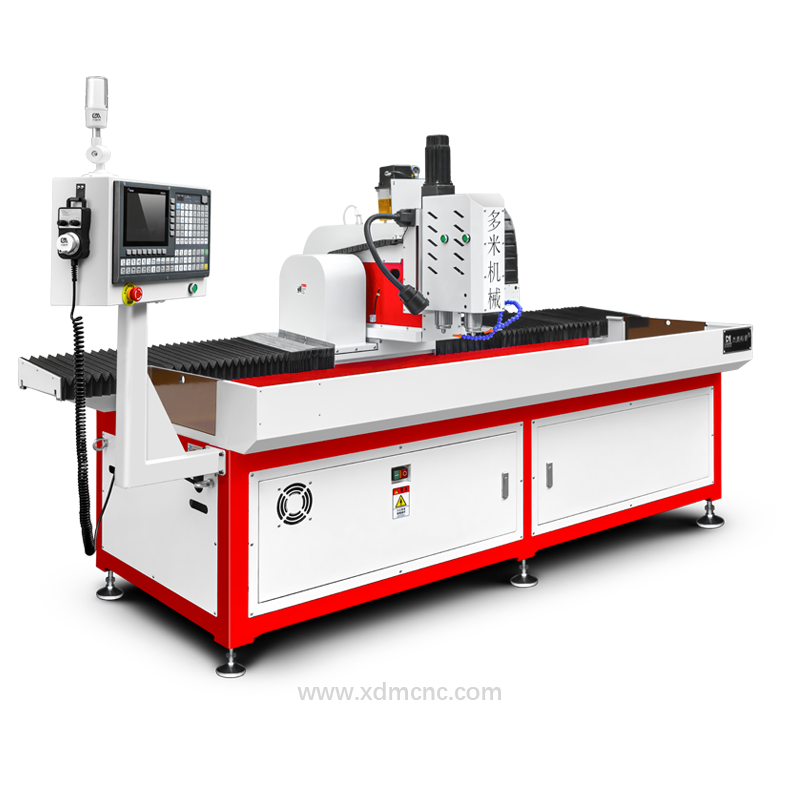
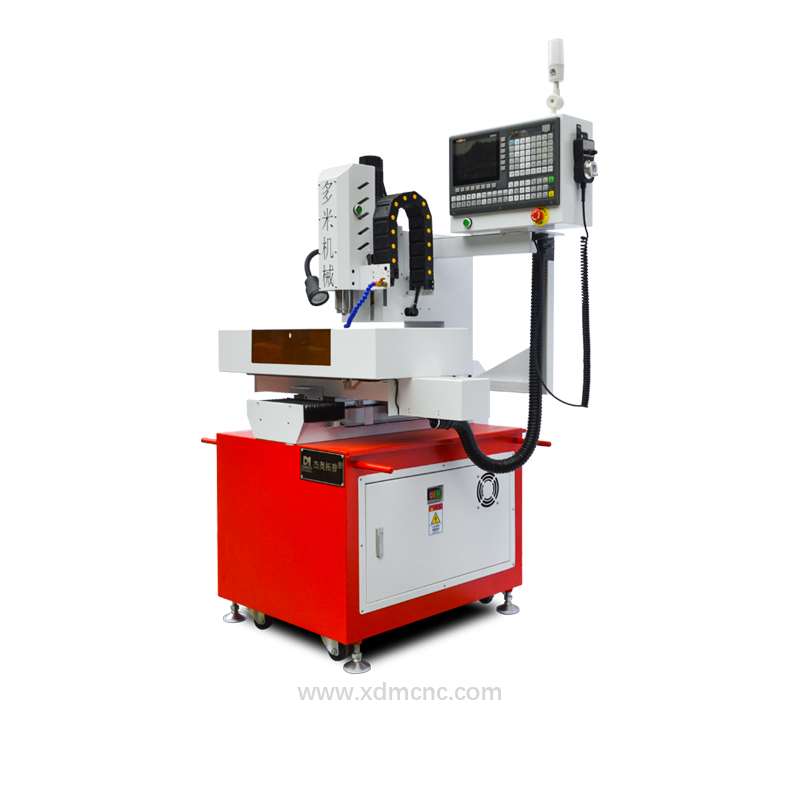
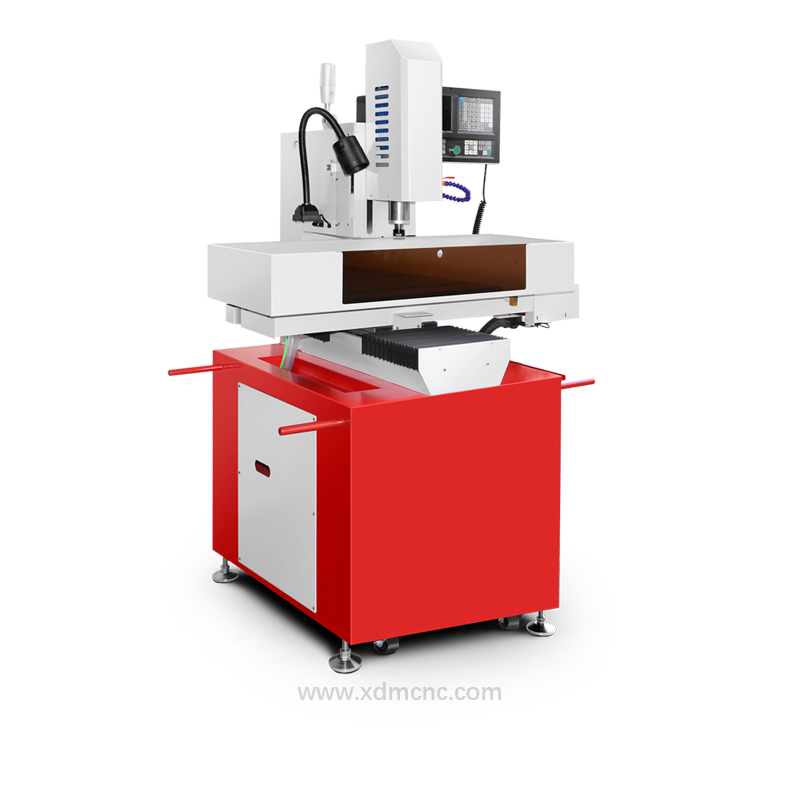
In precision manufacturing, medical instrumentation, aerospace components, and microelectronics, hole miniaturization has become a critical engineering requirement. While conventional CNC drilling is well-suited for diameters above 3.0 mm, micro drilling (typically defining hole diameters from 0.05 mm to 1.0 mm, extending up to 3.0 mm in micro-machining) operates in a fundamentally different physics domain where tool deflection, centrifugal runout, and chip clogging can cause immediate drill fracture.
Achieving repeatable, burr-free micro hole drilling at volume requires purpose-built machine dynamics: ultra-high-speed motorized spindles (24,000–60,000 RPM), total indicator reading (T.I.R.) runout under 0.003 mm, high-frequency micro-peck cycles, and automated tool breakage detection.

Figure 1: High-precision 0.3 mm micro hole array drilling on aircraft-grade aluminum alloy executed on a DUOMI micro CNC drilling machine.
What Is Micro Hole Drilling and Why Is It Challenging?
Micro hole drilling is the mechanical cutting process of producing micro-scale cavities and through-holes using solid micro-grain tungsten carbide twist drills. Unlike macro drilling, micro-machining faces distinct physical hurdles:
- Extreme Cutting Speed Disparity: At small diameters (e.g., 0.2 mm), maintaining a recommended carbide surface speed of 30–50 m/min requires spindle speeds between 45,000 and 80,000 RPM. Conventional drill spindles (3,000–12,000 RPM) operate at cutting speeds far too low, causing excessive tool loading, rubbing, and instant shank breakage.
- Radial Runout Sensitivity: In micro drilling, tool runout must not exceed 5% of the tool diameter. For a 0.1 mm drill, a runout of just 0.005 mm induces catastrophic bending fatigue and premature failure.
- Micro-Chip Packing & Thermal Expansion: Due to the microscopic cross-sectional area of drill flutes, chips cannot evacuate freely under continuous plunge feed. Without high-speed micro-pecking and optimized cutting fluid mist (MQL), swarf welds to the flute, resulting in immediate catastrophic tool snapping.
Micro Hole Drilling Process & Tooling Parameters Table
To achieve consistent hole quality and maximize solid carbide tool longevity, CNC machinists and manufacturing engineers should follow these standardized operational parameters:
| Machining Parameter | Recommended Operational Range | Engineering Significance & Best Practices |
|---|---|---|
| Hole Diameter Range | 0.05 mm – 1.0 mm (Extending to 3.0 mm) | Tailored micro solid carbide drill bits with reinforced 3.0 mm or 4.0 mm shanks |
| Spindle Operating Speed | 24,000 – 60,000 RPM | High-frequency motorized electric spindles maintain necessary linear cutting velocity |
| Spindle T.I.R. Runout | < 0.003 mm (3 μm) at tool tip | Precision HSK-E25 or high-grade collet chucks eliminate radial vibration |
| Feed per Flute (fz) | 0.001 mm – 0.008 mm/rev | Controlled micro-feed rates prevent axial buckling while maintaining cutting shear |
| Peck Drilling Strategy | High-frequency G73 / G83 cycles | Peck depth set to 0.5D – 1.5D to clear micro-chips and prevent heat buildup |
| Cooling & Lubrication | High-pressure MQL (Oil-Air Mist) | 4–8 bar atomized mist penetrates micro holes, cooling the cutting lip and ejecting swarf |
| Tool Breakage Detection | Non-contact optical laser sensor | Sub-second tool verification between cycles prevents blank scrap on multi-hole parts |
| Positional & Hole Tolerance | ±0.005 mm repeatability | Closed-loop linear optical scales compensate for thermal drift during long cycles |
Critical Engineering Solutions in DUOMI CNC Micro Drilling
To overcome the physical bottlenecks of micro-hole production, DUOMI CNC Micro & Small Hole Drilling Machines integrate four proprietary engineering solutions:
1. Ultra-High Frequency Electric Spindles
DUOMI equips its micro drilling stations with direct-drive high-frequency spindles reaching 40,000 to 60,000 RPM. Featuring hybrid ceramic ball bearings and closed-loop liquid chilling jackets, the spindle maintains thermal equilibrium over continuous 24/7 operating shifts.
2. High-Precision Vibration-Damped Cast Bed
Vibration is the number one cause of micro drill failure. DUOMI utilizes heavy-duty aged Meehanite cast-iron machine frames with wide-span precision linear roller guides to absorb micro-vibrations and sustain sub-micron positioning stability.
3. Synchronized Multi-Spindle Production Capability
For high-volume manufacturing (such as heat sinks, filtration plates, and electronics carriers), DUOMI delivers multi-spindle CNC configurations (dual-spindle, triple-spindle, and quadruple-spindle). These heads drill identical micro patterns simultaneously, multiplying production throughput by 200% to 400% without increasing labor costs.
4. In-Line Broken-Tool Protection
Broken drills left undetected in deep cavities result in ruined workpieces and subsequent broken taps. Our micro drilling centers incorporate optical laser tool inspection sensors that check drill integrity after every drilling pass within 0.3 seconds.
Mission-Critical Industrial Applications
High-precision micro hole drilling is vital across modern advanced engineering sectors:
- Medical Devices & Implants: Micro-channels in laparoscopic surgical instruments, titanium bone screws, endoscopy fluid channels, and drug delivery catheters.
- Electronics & Semiconductor Packaging: Microvias and test socket holes (pogo pin plates) in engineering plastics (Torlon, PEEK, Vespel) and ceramic composites.
- Automotive Fuel Injection & Sensors: Gasoline direct injection (GDI) spray orifices, diesel common-rail nozzles, and ABS brake pressure sensor housings.
- Aerospace & Defense: Micro cooling holes on turbine blade edges, satellite fluid throttling valves, and precision inertial navigation housings.
- Precision Filtration & Energy: High-density stainless steel 316L wire mesh support plates and micro-orifice fuel cell bipolar plates.
Selecting the Ideal Micro CNC Drilling Equipment
When evaluating micro drilling machinery, manufacturing managers should ensure the machine aligns with their production volume and part geometry:
- For ultra-compact multi-hole arrays on delicate components, discover the Micro Holes CNC Drilling Machine.
- For high-volume automotive and electronics parts requiring parallel processing, explore the Double Spindle CNC Drilling Machine for Micro Holes.
- To understand detailed structural differences, spindle options, and axis configurations, read our detailed comparison on micro hole drilling machine hardware architecture, or examine deep-hole aspect ratio dynamics in our small hole drilling machine technical guide.
Request a Turnkey Micro Drilling Solution from DUOMI CNC
With over 20 years of dedication to CNC hole-making and tapping automation, DUOMI CNC provides turnkey engineering consultations, custom workpiece fixturing, optimized G-code cycle programming, and factory-direct equipment delivery worldwide.
Contact our engineering team today to submit your part drawings for cycle time evaluation and sample micro drilling trials.
Need High-Efficiency CNC Drilling & Tapping Machinery?
Consult with our senior application engineers to get a custom cycle time simulation and tailored machine proposal within 24 hours.