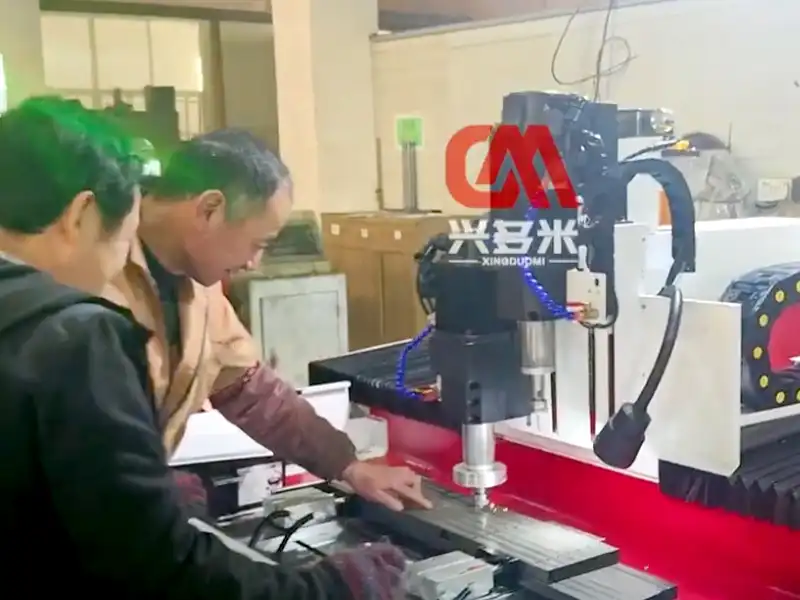
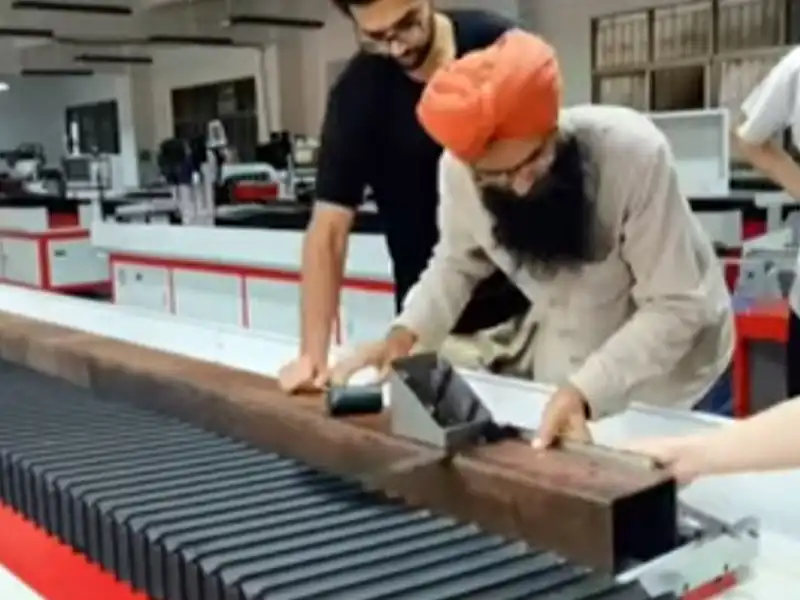
Drilling holes in square tubes and structural hollow profiles is a critical manufacturing process across fitness equipment, furniture framing, automotive chassis, solar racking, and architectural steel fabrication. However, conventional manual drilling often causes wall collapse, severe burr formation, inconsistent hole pitch tolerances, and excessive labor overhead.
Achieving high precision, clean cut edges, and fast cycle times requires understanding the dynamics of thin-walled tube machining and transitioning from manual processes to dedicated CNC tube drilling technology.
1. Key Engineering Challenges in Square Tube Drilling
Square profiles present unique structural and metallurgical conditions that complicate mechanical drilling:
- Thin-Wall Tube Deformation: Lack of internal support causes the top surface of thin-walled tubes (1.0 mm – 3.0 mm) to dish inward under axial drill point thrust force.
- Excessive Burr Formation: Exit burrs inside the tube cavity are difficult to access and remove, adding costly secondary deburring steps (failing ISO 13715 edge compliance).
- Position Drift on Radiused Corners: Standard drill bits tend to walk or slip when drilling near the outer bend radius of cold-formed square tubing.
- Low Pitch Precision: Thermal expansion and manual layout errors cause hole-to-hole center-distance drift, leading to assembly misalignments.
2. Comparison of Tube Drilling Technologies
2.1 Manual Drilling & Magnetic Bench Drills
While suitable for prototype fabrication or job-shop repair, manual bench drilling produces inconsistent hole coordinates ($\pm 0.5\text{ mm}$ variance), high operator fatigue, and high rejection rates during assembly.
2.2 Mechanical Punching / Stamping
Punching offers high speed but incurs severe limitations: requiring custom hardened die sets, causing wall distortion on thick profiles ($>3\text{ mm}$), and causing micro-fracturing along cold-worked edge zones.
2.3 Standard Vertical Machining Centers (VMC)
Standard 3-axis CNC VMCs provide accuracy but suffer from limited bed length for long profiles ($3\text{ m} - 6\text{ m}$), slow loading setups, and high hourly operational overhead.
2.4 Dedicated CNC Profile & Square Tube Drilling Machines
Purpose-built CNC profile drilling machines feature high-rpm spindles, specialized pneumatic clamping, automated indexing, and options for thermal friction drilling and tapping—achieving pitch tolerances within $\pm 0.05\text{ mm}$.
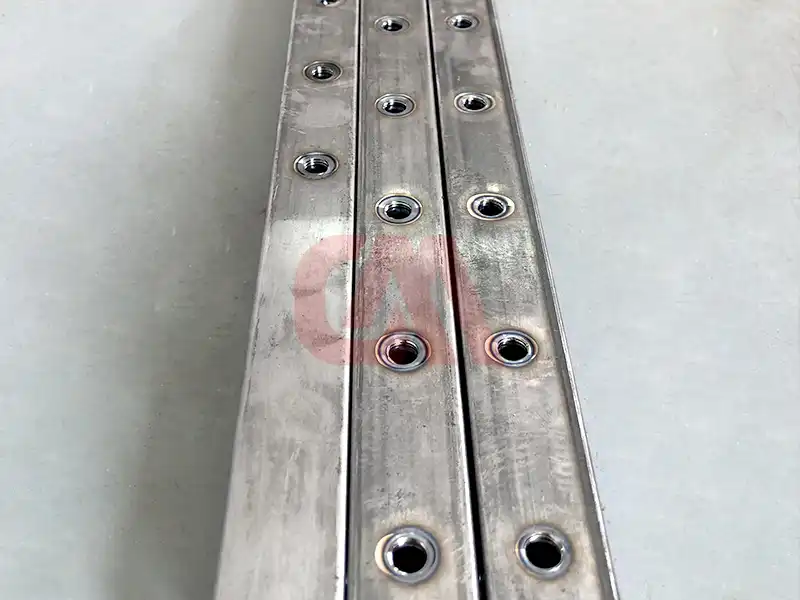 Figure 1: High-efficiency CNC Thermal Drilling & Tapping Machine designed for long square and rectangular steel profiles.
3. Advanced Solution: Thermal Friction Drilling (Flowdrilling)
When standard threads are required in thin-walled square tubing, traditional drilling requires press nuts or weld nuts. Thermal friction drilling (Flowdrilling) uses high RPM and axial pressure to heat tungsten carbide bits to $600^\circ\text{C} - 800^\circ\text{C}$, displacing the metal to form a drawn bushing wall 3 to 4 times thicker than the original tube wall. This bush is subsequently roll-tapped to create high-strength thread connections in a single automated process.
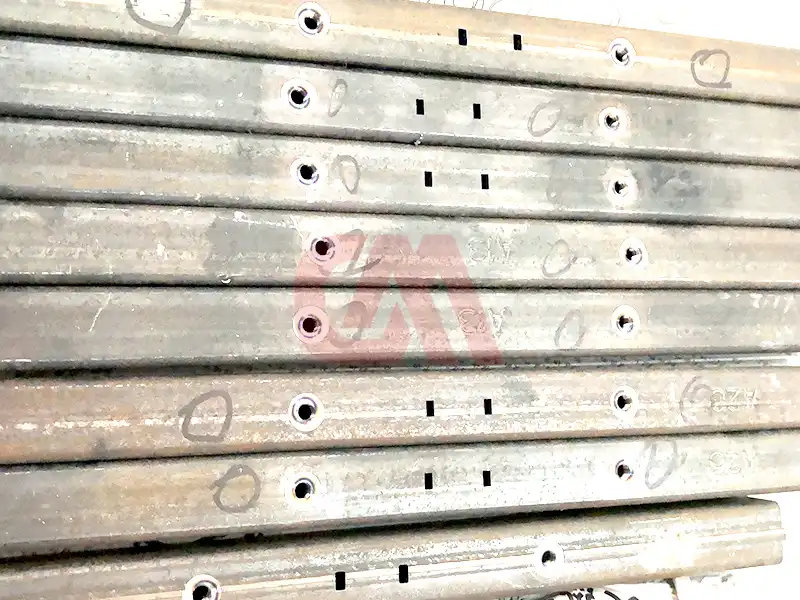 Figure 2: Friction flow-drilling and thread forming on carbon steel square tubing used in fitness equipment fabrication.
4. Standardized CNC Tube Drilling Workflow & Parameters
Step 1: Rigid Clamping & Zero Positioning
Utilize multi-point pneumatic self-centering vices or hydraulic clamps to secure long square tubes without crushing outer walls. Servo-driven positioning systems ensure zero-point alignment across $6\text{ m}$ length spans.
Step 2: Tooling Selection
- Carbon Steel (Q235 / A36): TiAlN-coated solid carbide drills with 140° split point.
- Stainless Steel (304 / 316): Coated carbide drills with internal coolant supply (20–40 bar) to manage work-hardening.
- Thin-Wall Profile Fastening: Tungsten carbide thermal friction drills paired with cold-forming roll taps.
Step 3: Recommended Cutting & Drilling Parameters
| Material | Tube Profile / Wall Thickness | Hole Diameter | Spindle Speed (RPM) | Feed Rate (mm/min) | Technology / Tool Type |
|---|---|---|---|---|---|
| Mild Steel (Q235) | 50 × 50 × 2.0 mm | M8 (7.3 mm) | 2,800 – 3,200 | 200 – 280 | Carbide Drill / Flowdrill |
| Stainless Steel (304) | 40 × 40 × 1.5 mm | M6 (5.3 mm) | 1,800 – 2,200 | 120 – 160 | Coated Solid Carbide |
| Aluminum (6061-T6) | 60 × 60 × 3.0 mm | 10.0 mm | 4,500 – 6,000 | 450 – 650 | 2-Flute Uncoated Carbide |
| Structural Carbon Steel | 100 × 100 × 5.0 mm | M10 (9.2 mm) | 1,400 – 1,800 | 150 – 200 | Thermal Friction + Roll Tap |
5. Maximizing ROI with Multi-Spindle CNC Solutions
Investing in dual-station or multi-spindle CNC tube drilling systems allows simultaneous loading and machining (pendulum processing). Dual stations cut non-cutting loading times to zero, delivering a productivity increase of up to 300% compared to traditional 1-spindle CNC machining setups.
Need High-Efficiency CNC Drilling & Tapping Machinery?
Consult with our senior application engineers to get a custom cycle time simulation and tailored machine proposal within 24 hours.